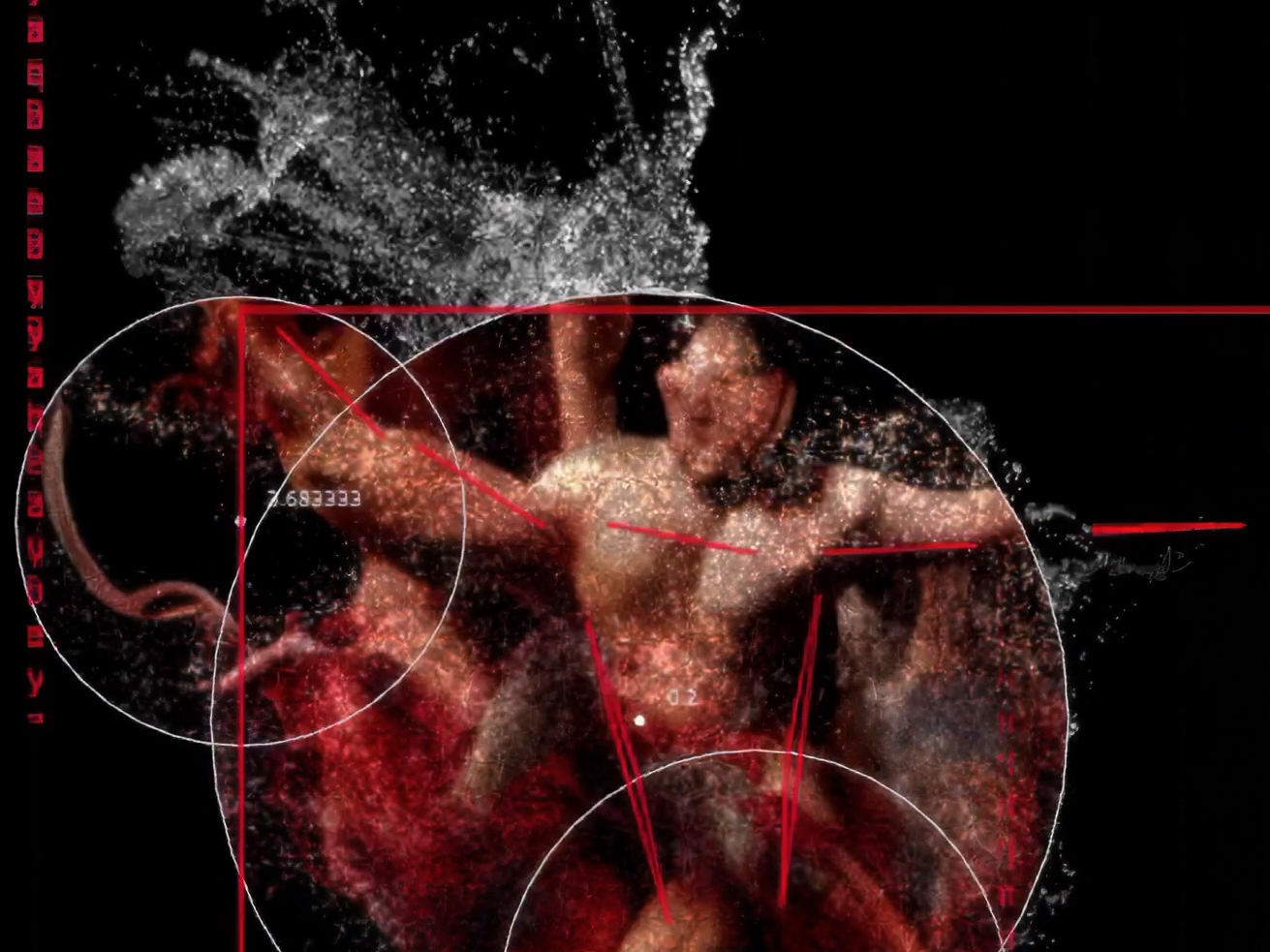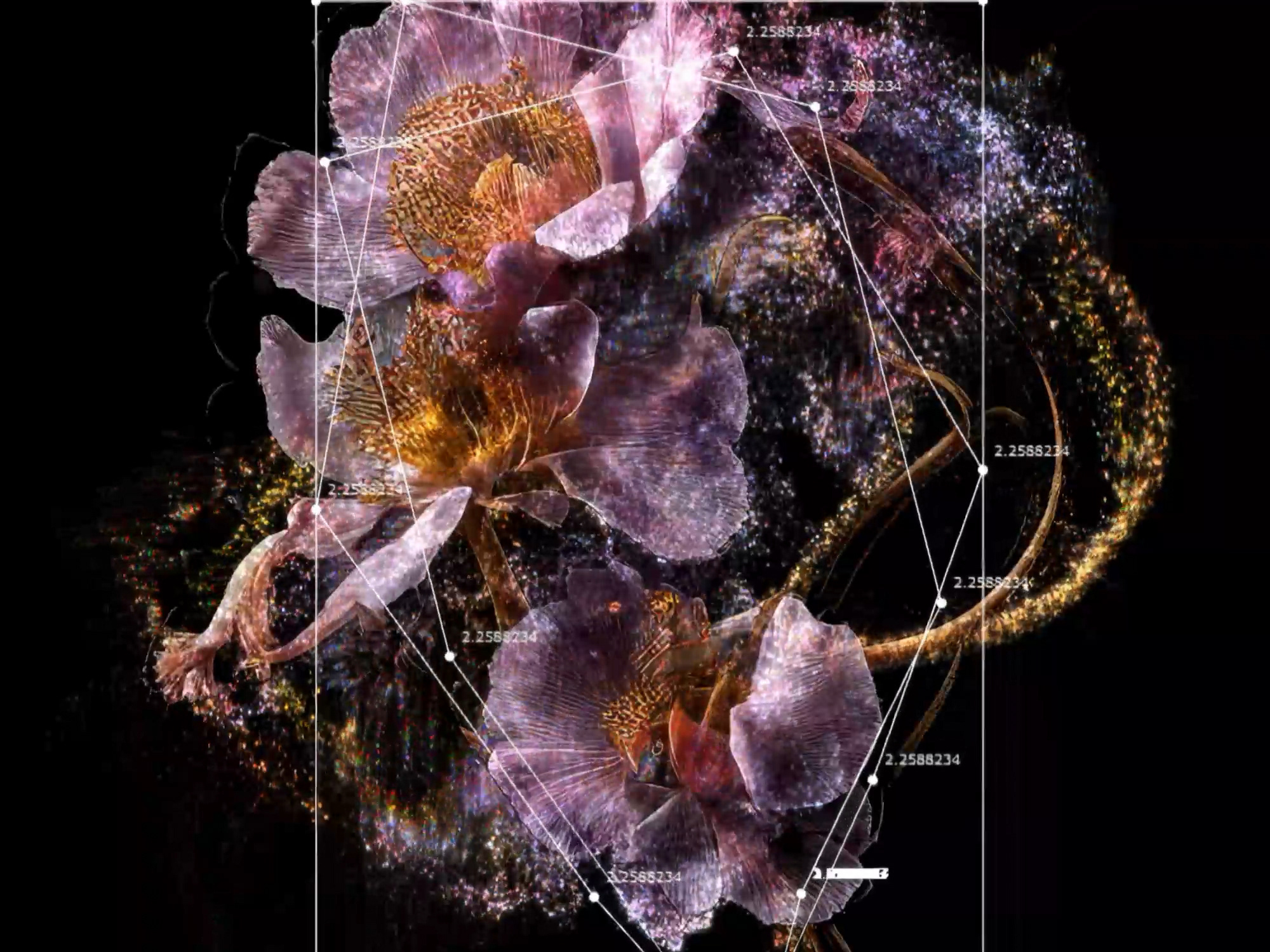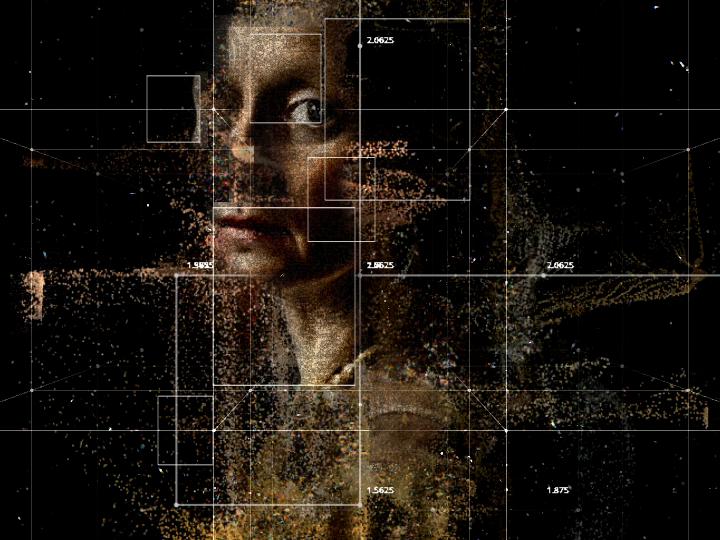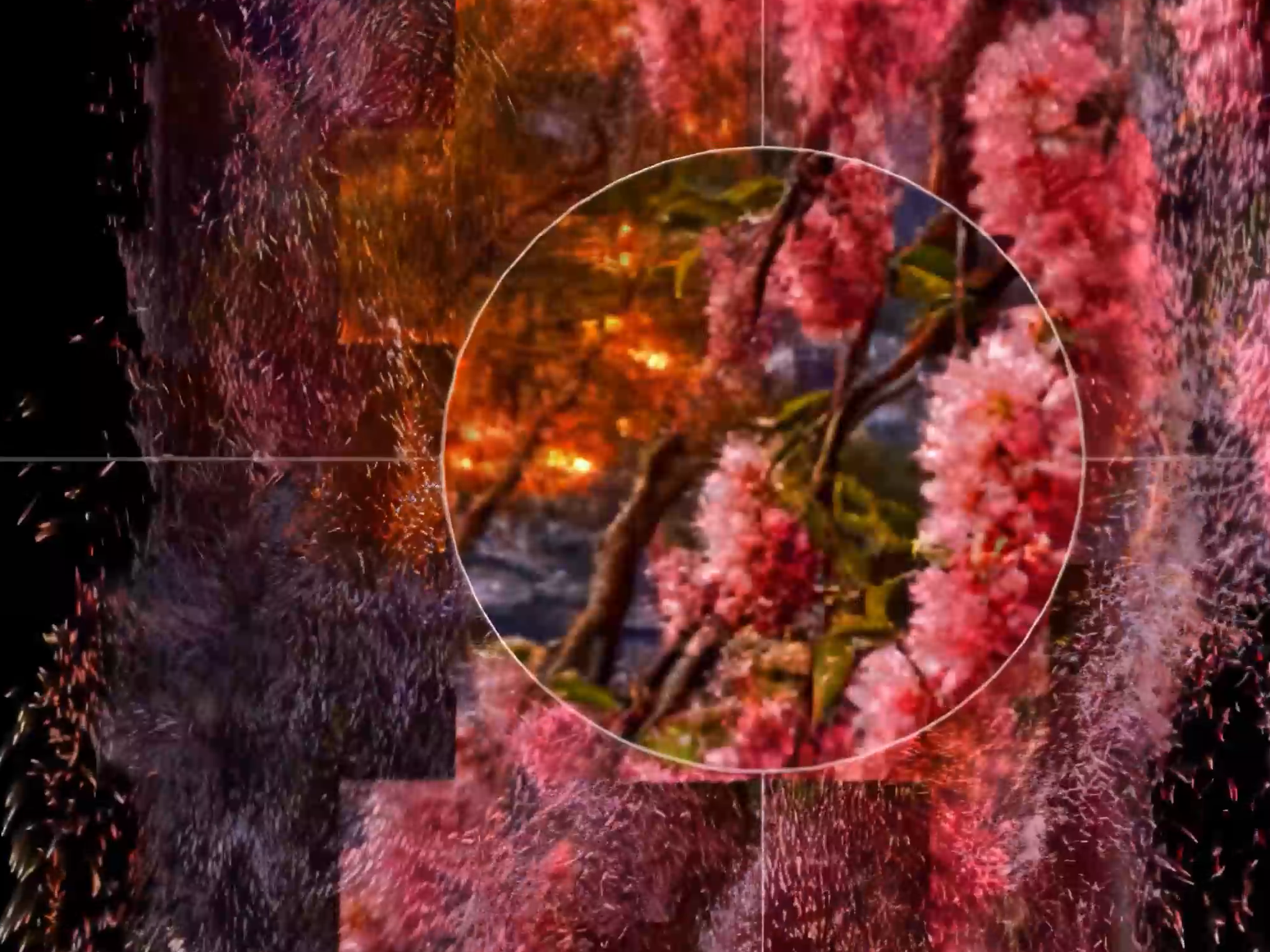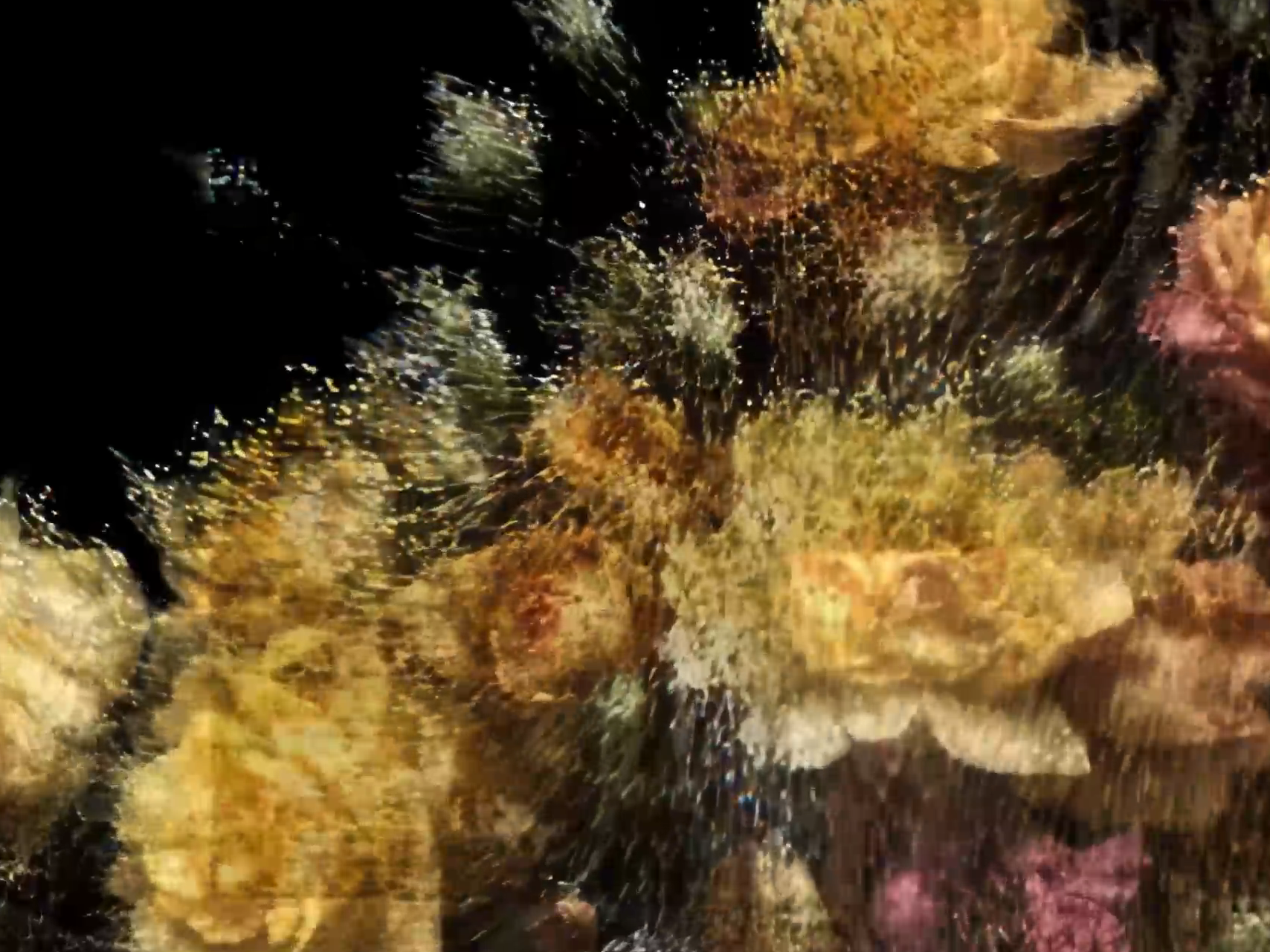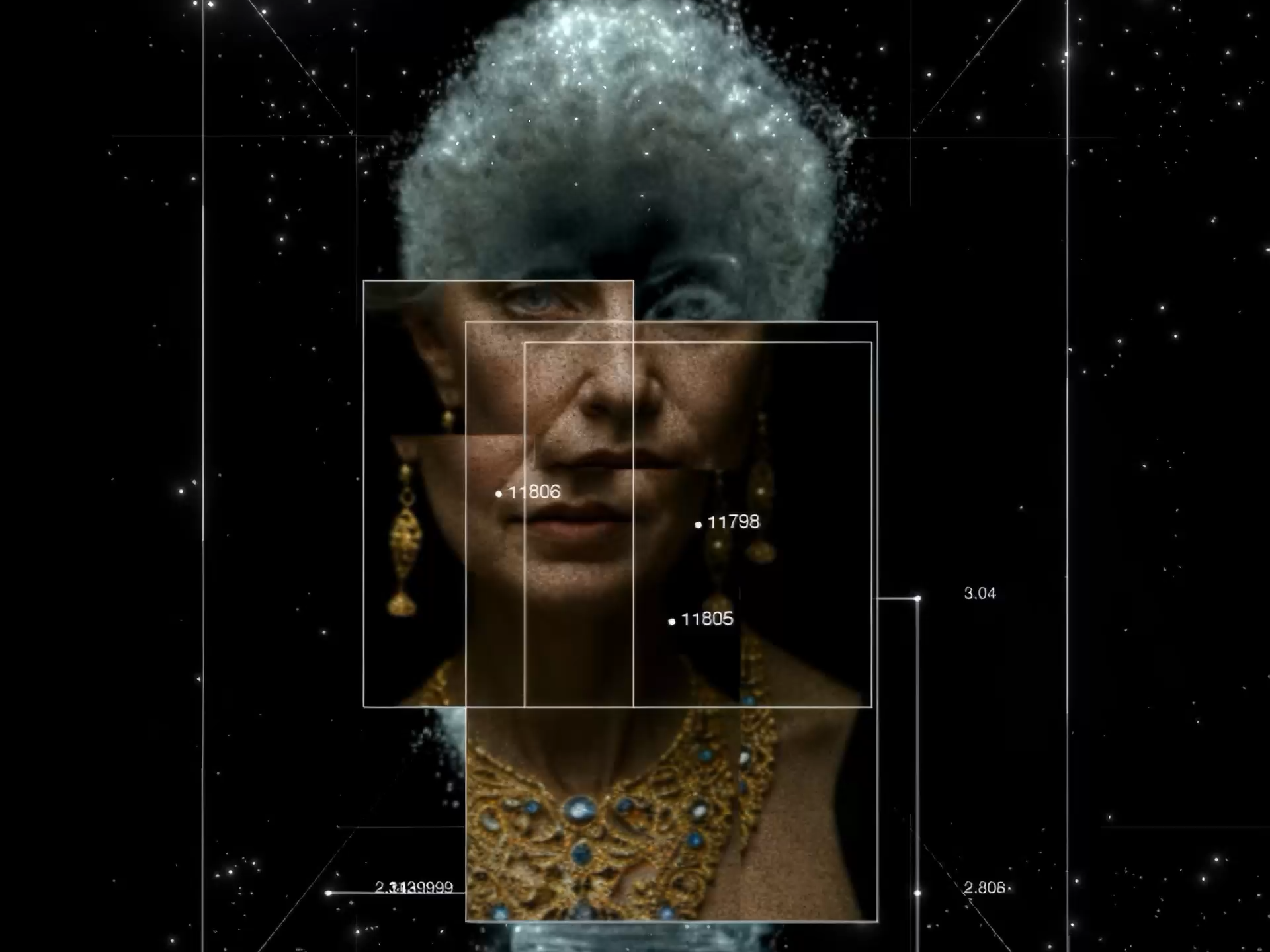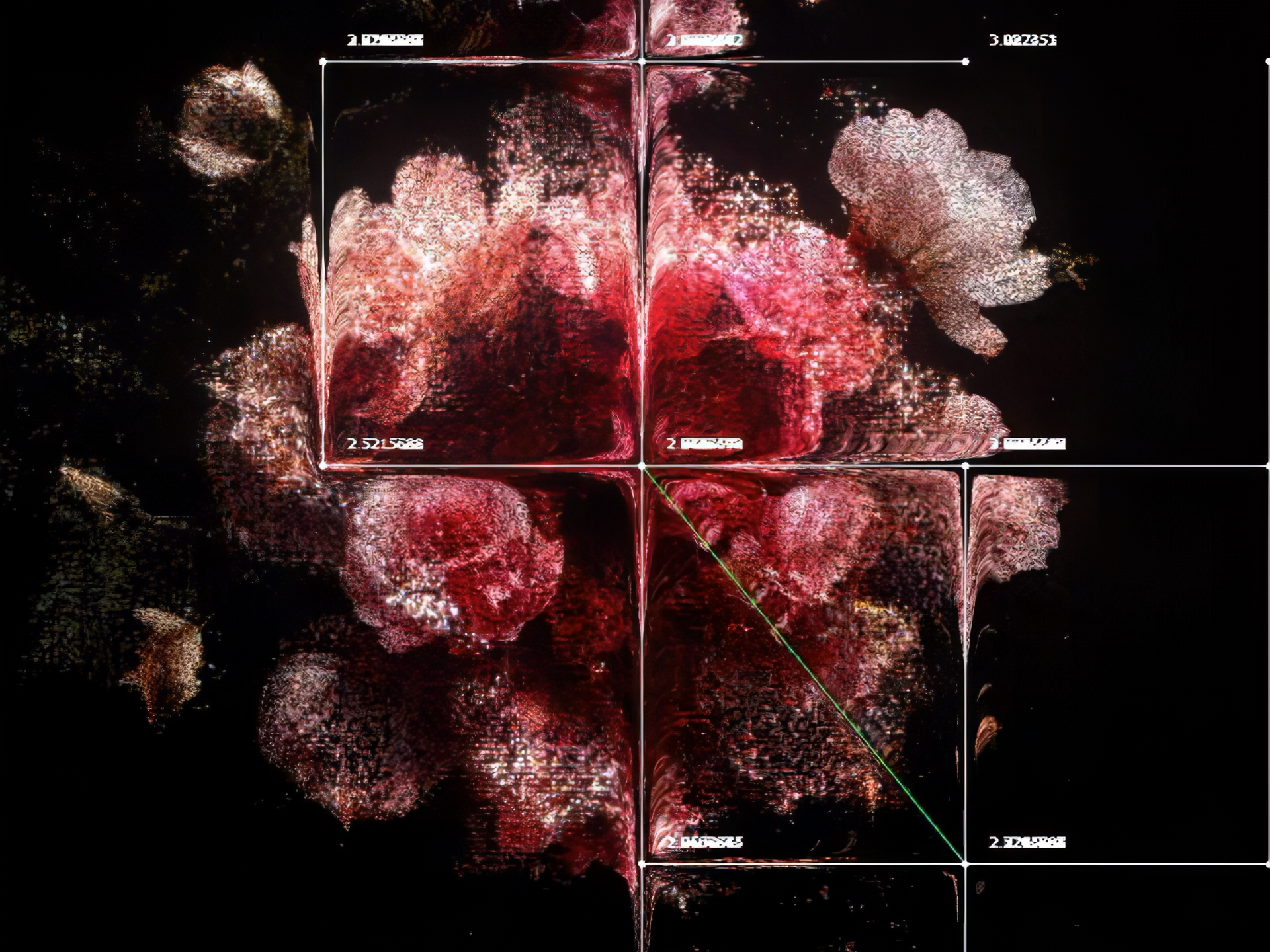
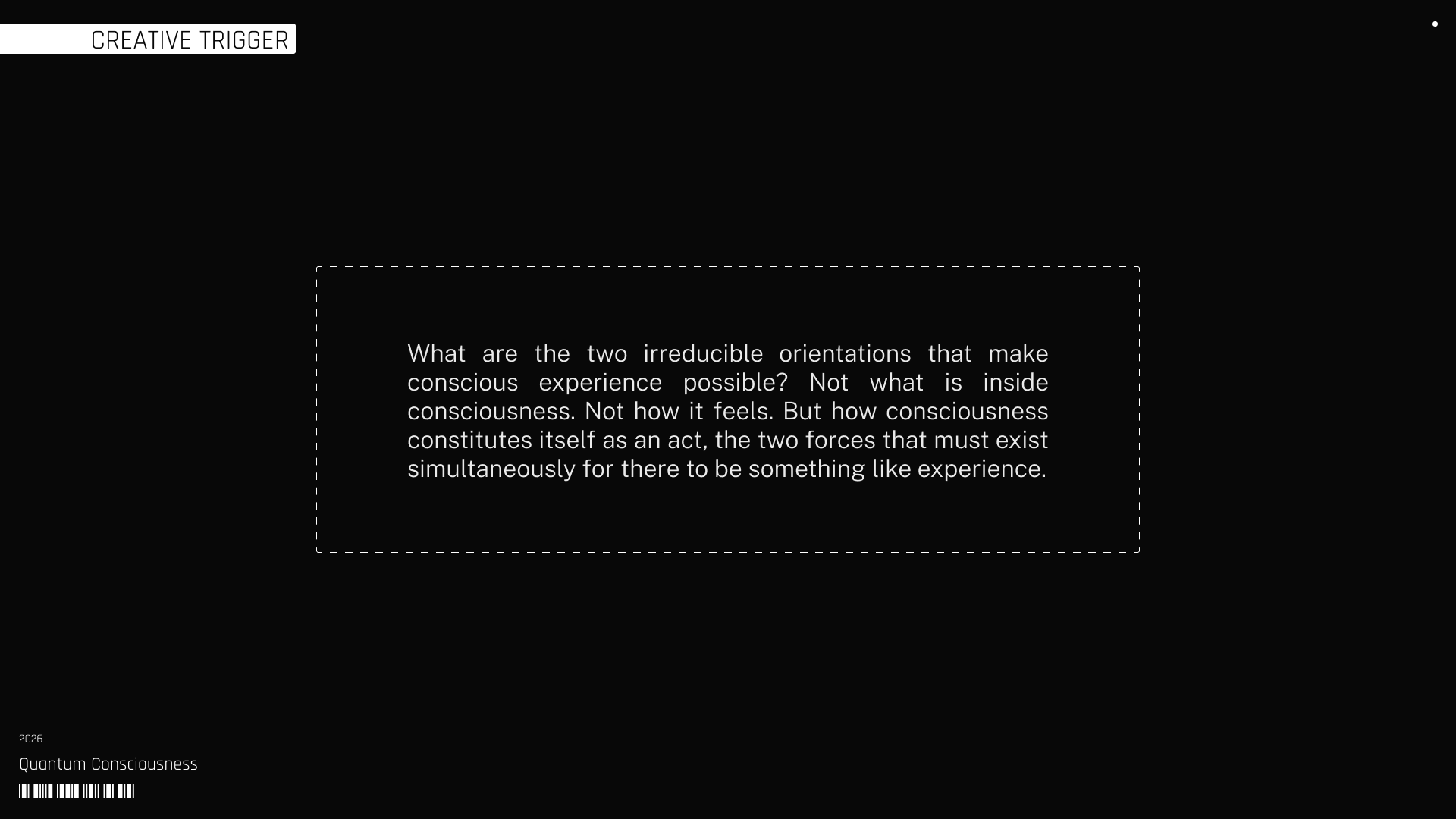
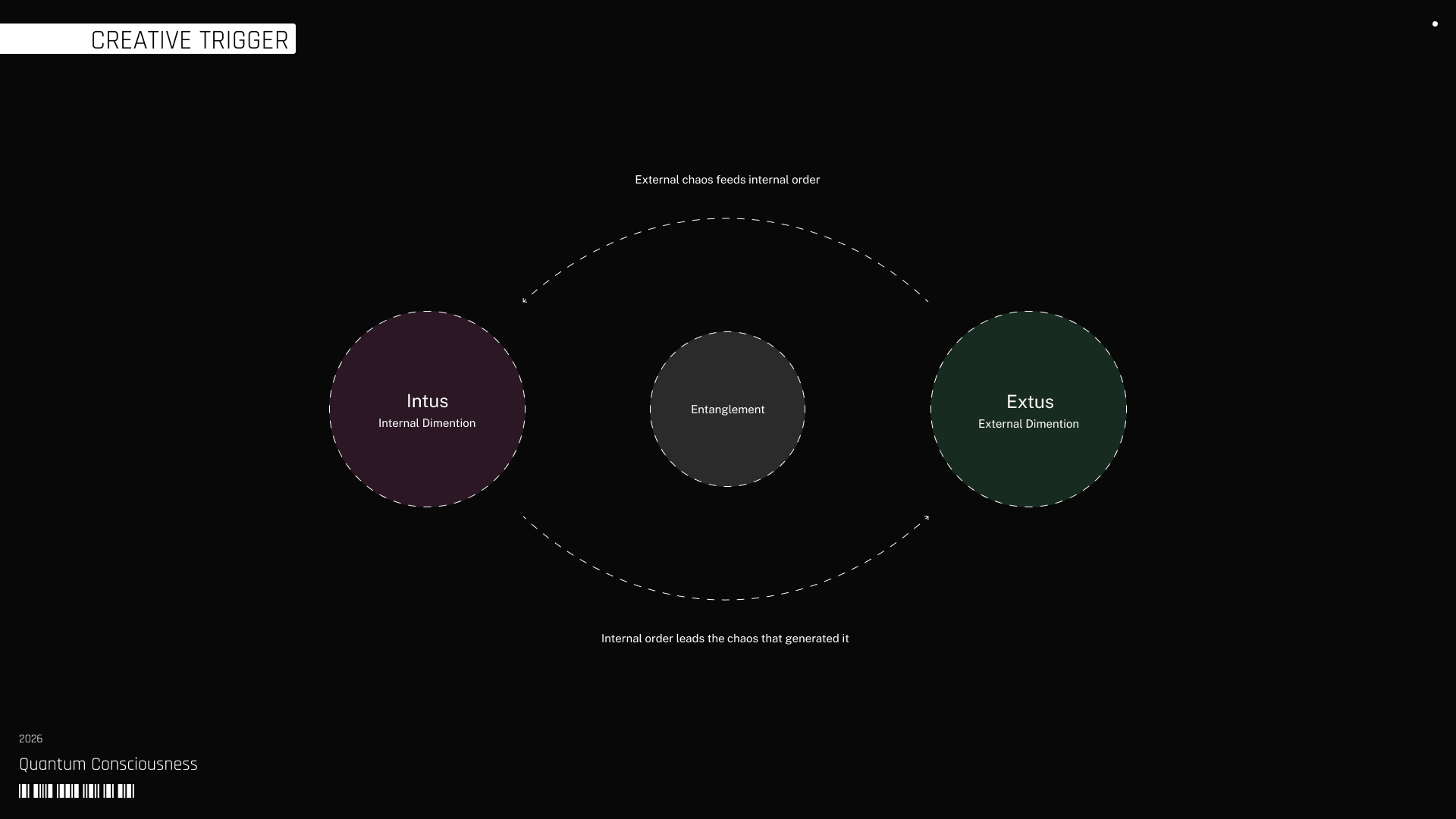
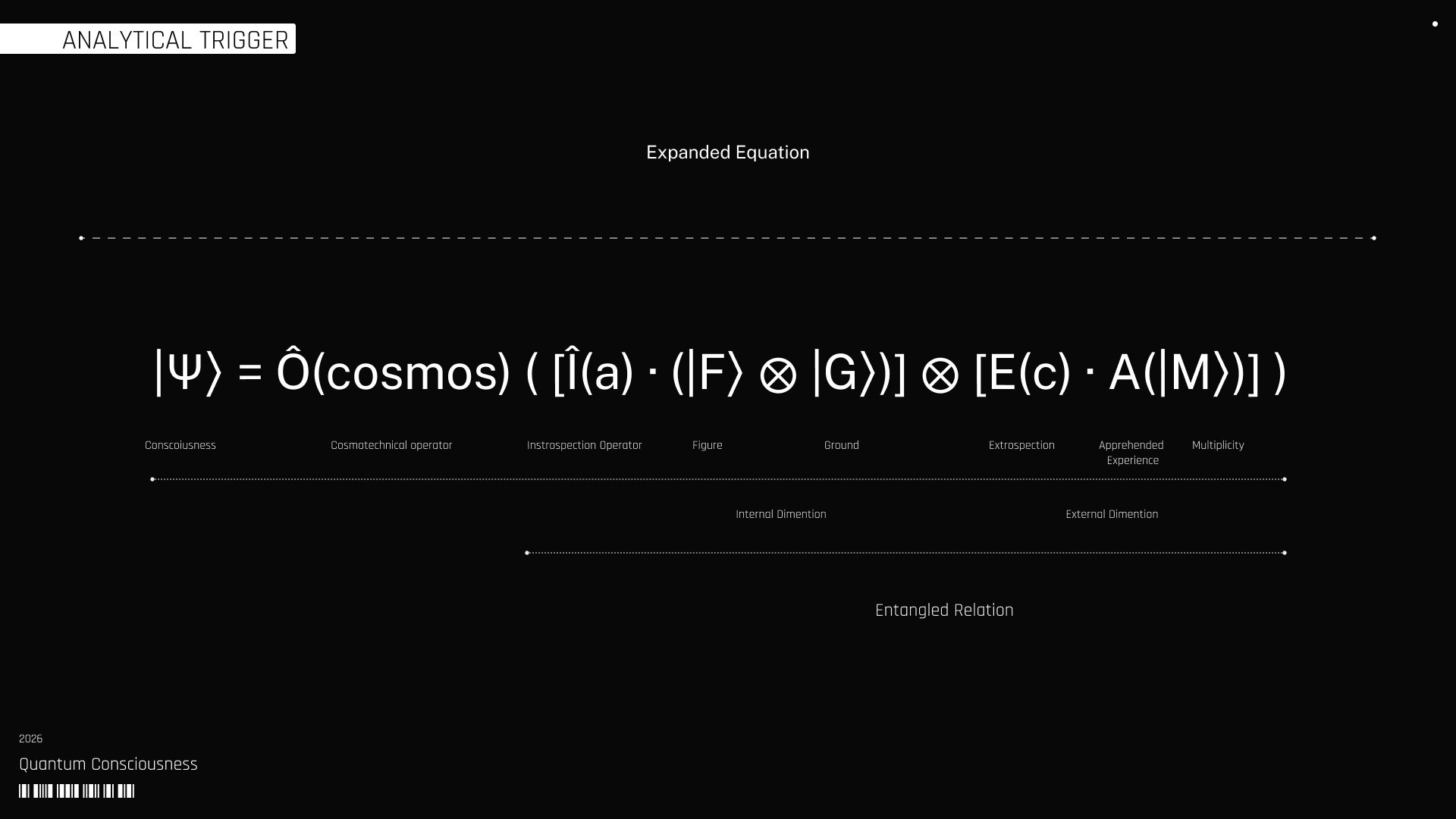
Numen emerges from a tension that cannot be resolved and, precisely because of that, sustains every act of consciousness. It begins in a split that cannot be separated: an inward orientation that organizes, filters, and stabilizes, and an outward orientation that exposes itself to multiplicity before it is structured. These two movements occur simultaneously, each carrying the other as the condition of its own existence. Conscious experience persists within that bond as a dynamic equilibrium that never settles, continuously reconfiguring itself through the interplay between order and chaos.
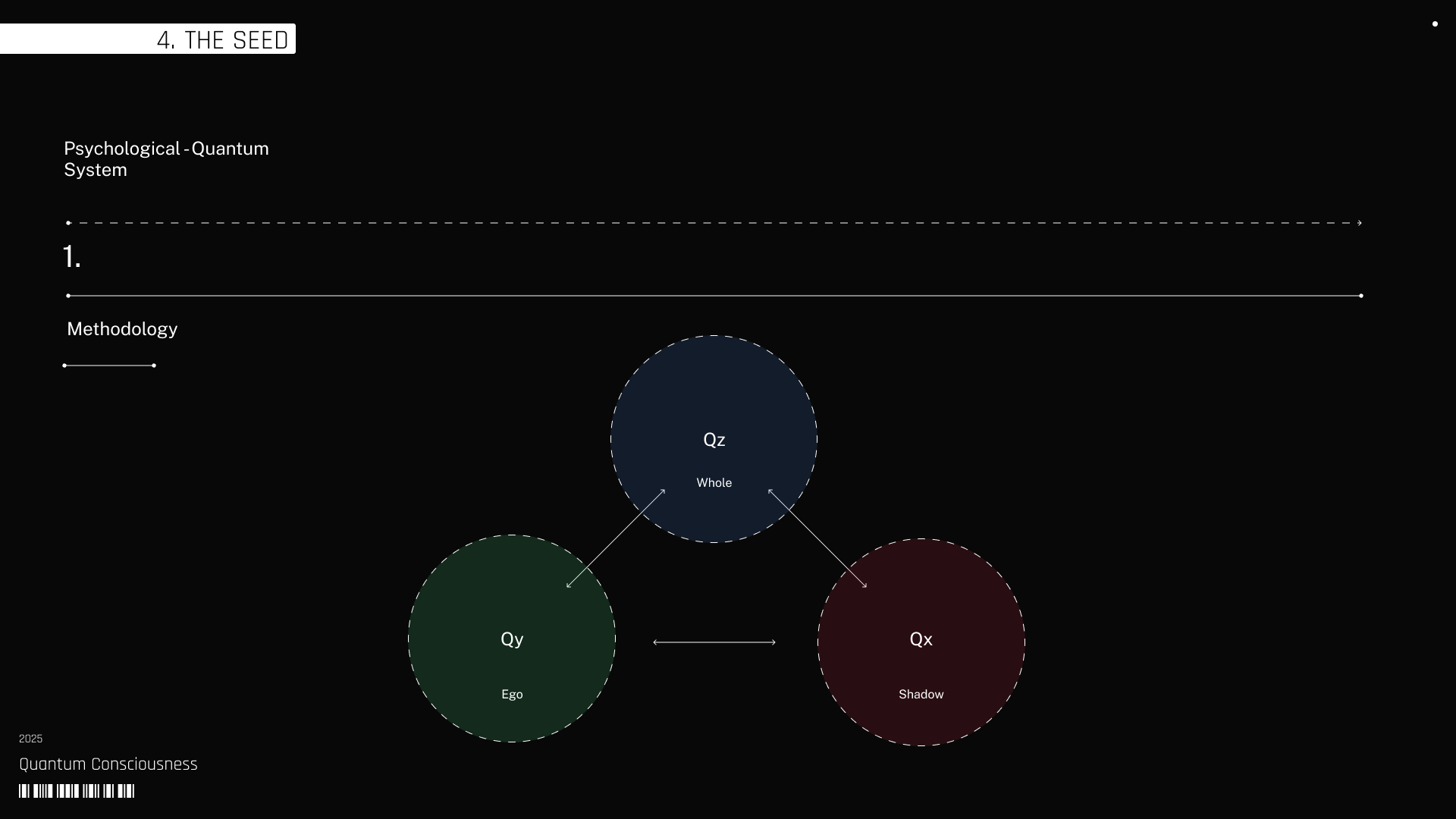
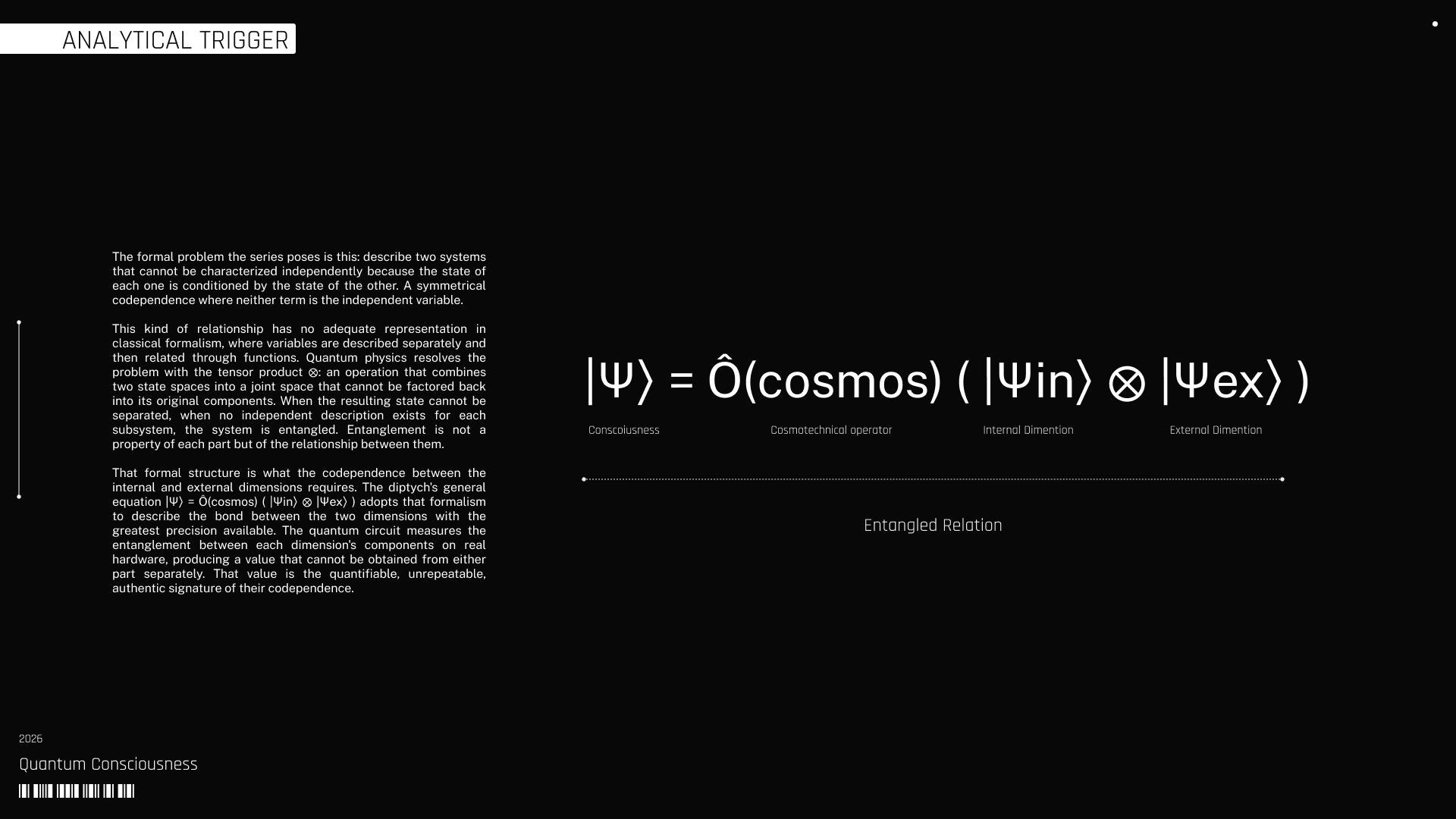
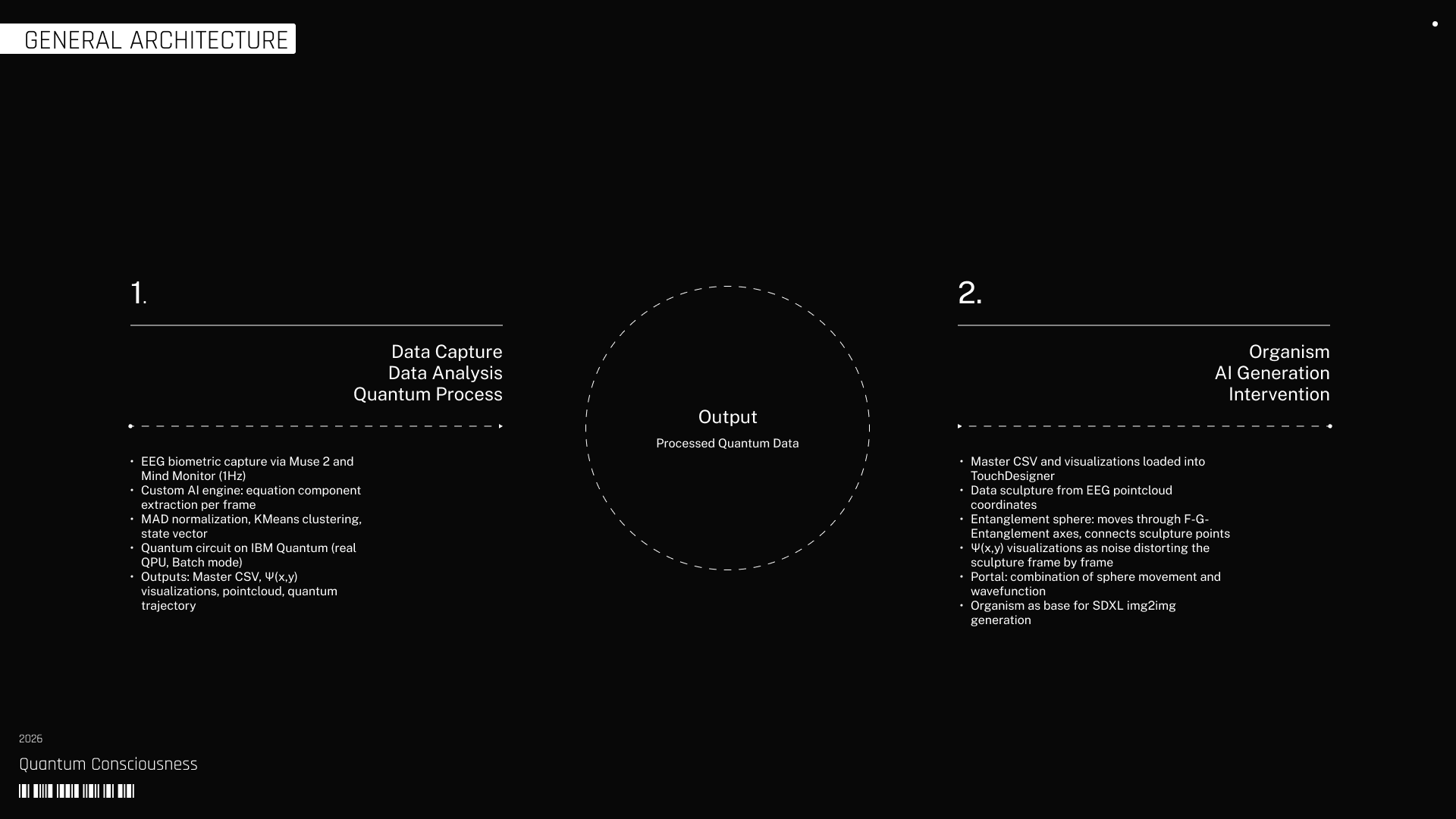
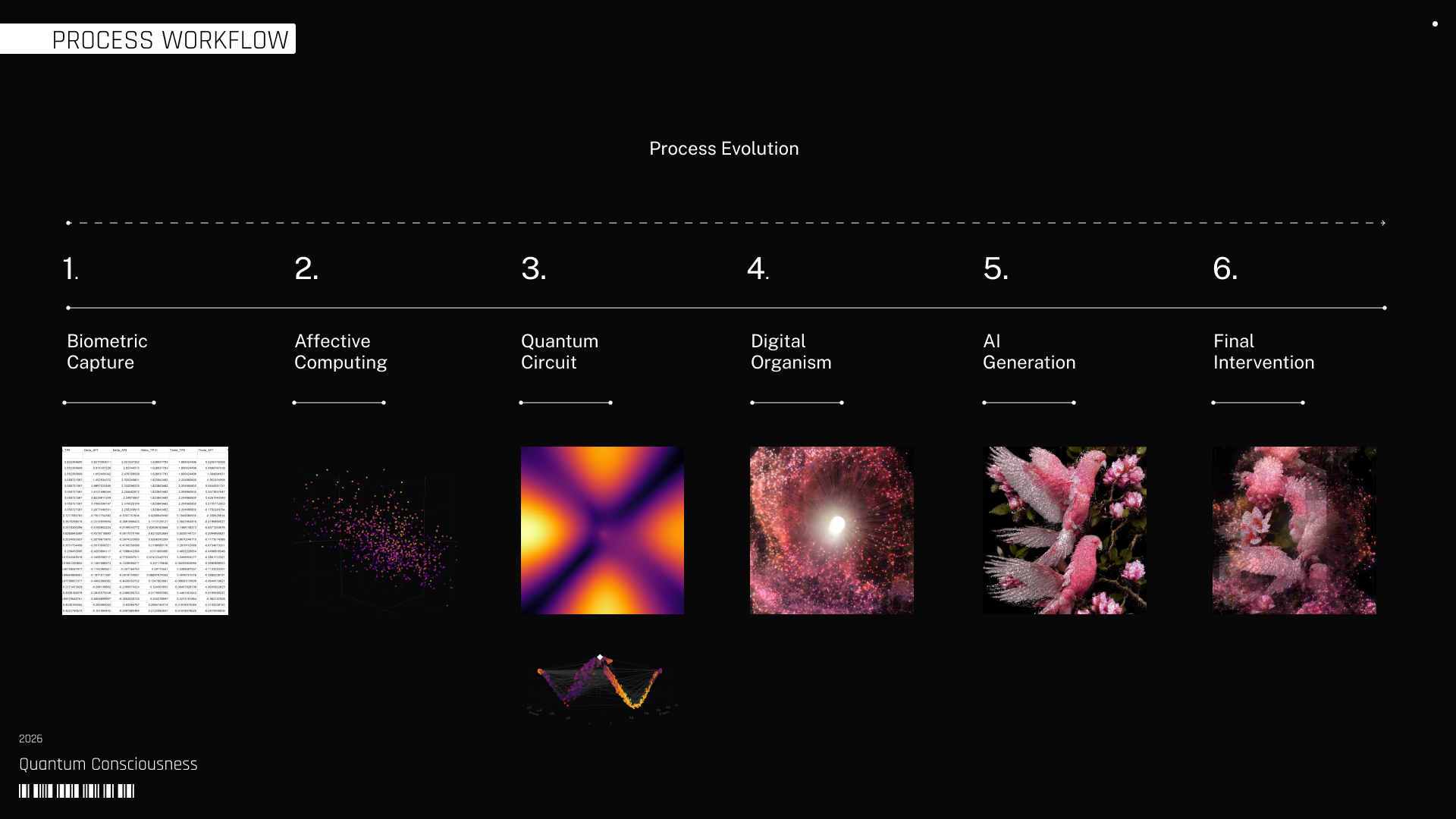
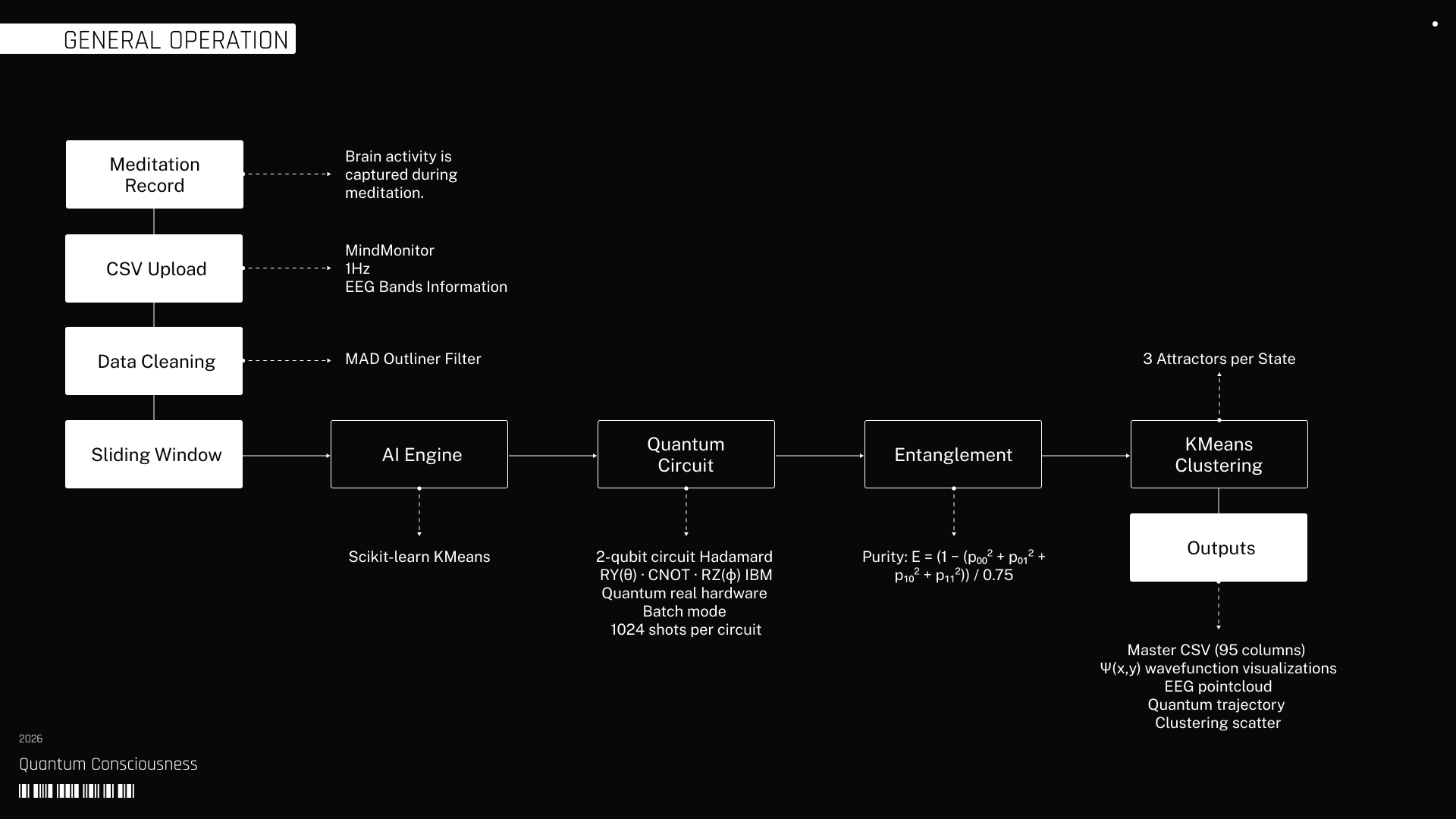
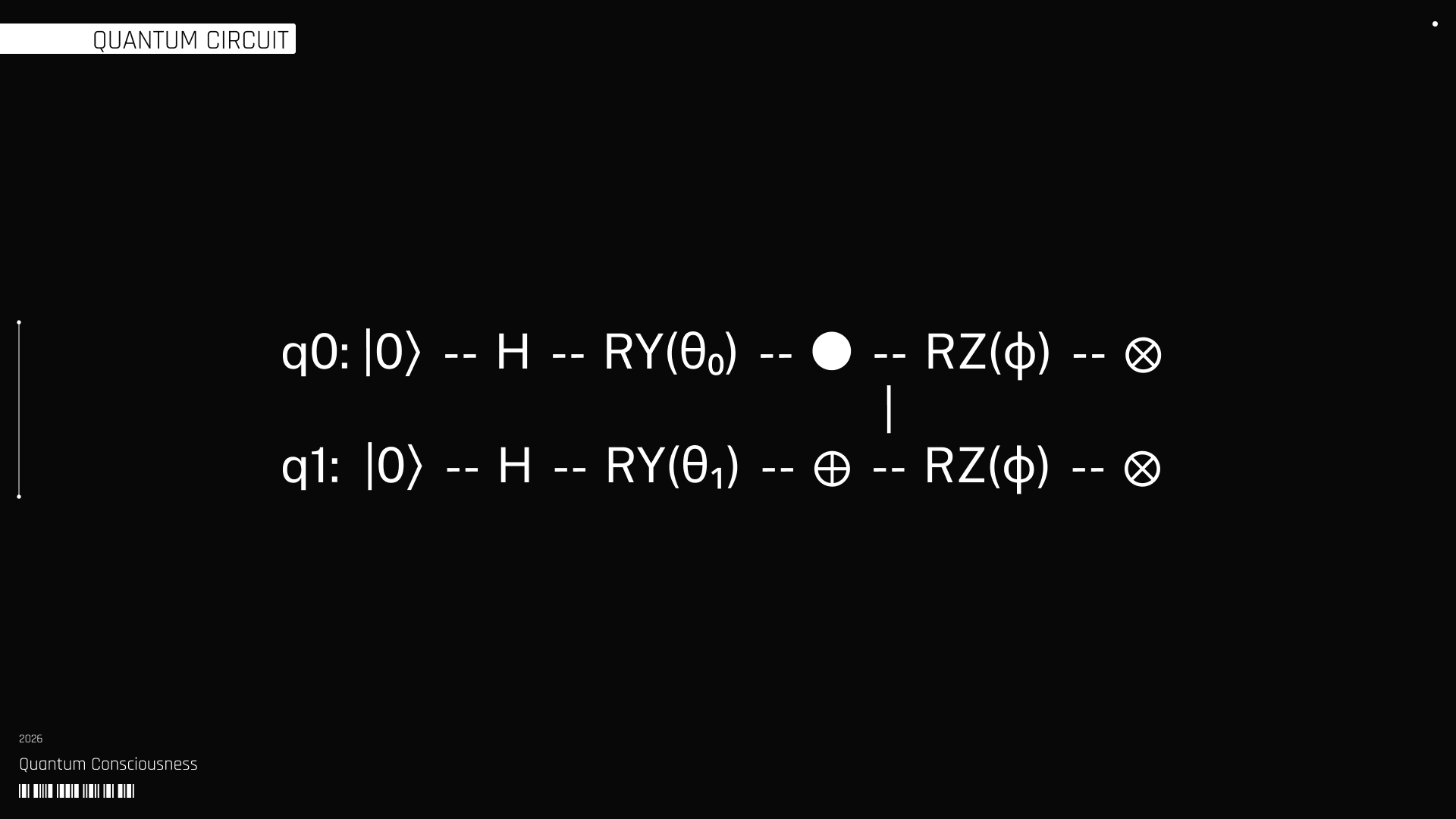
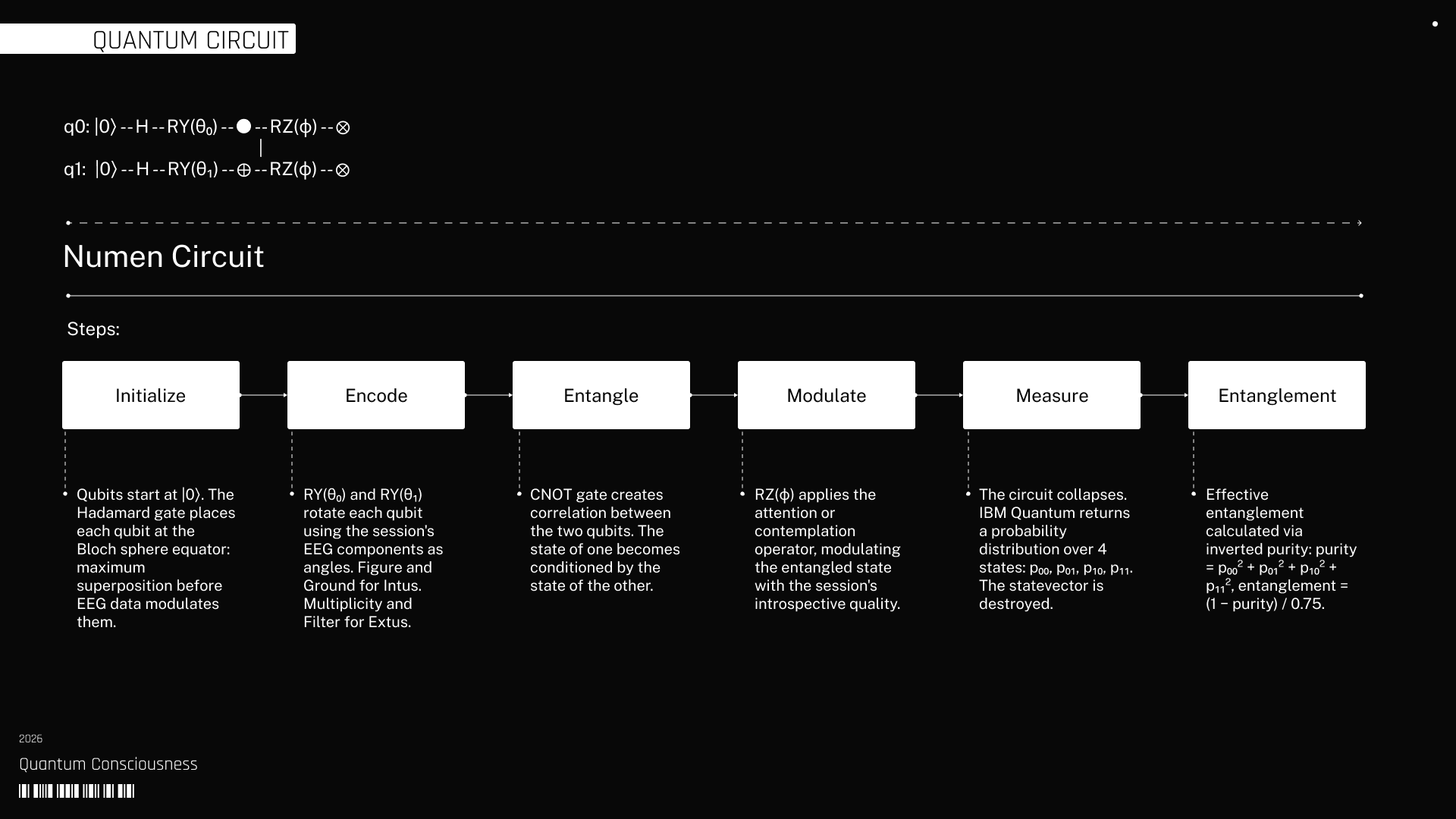
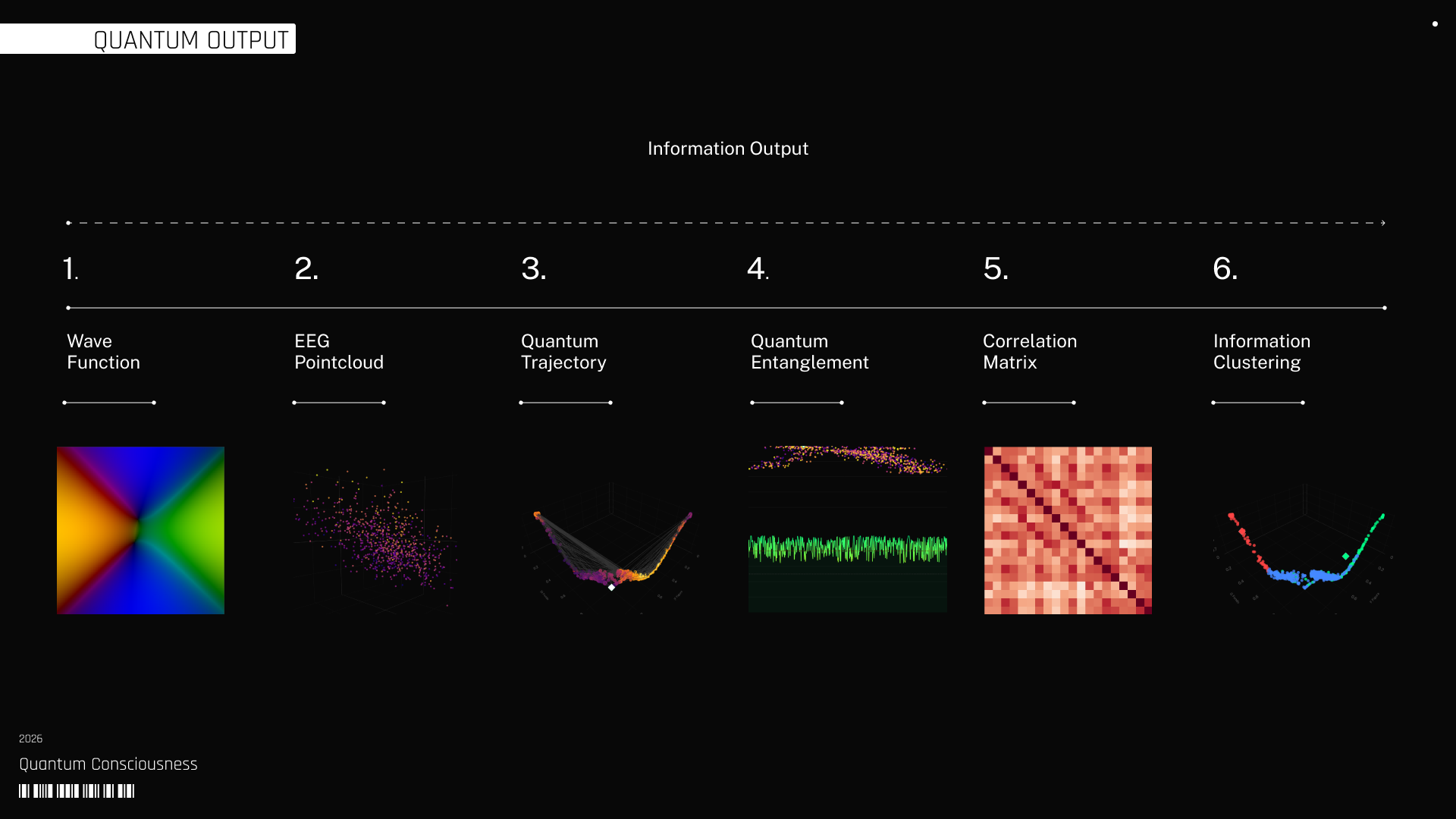
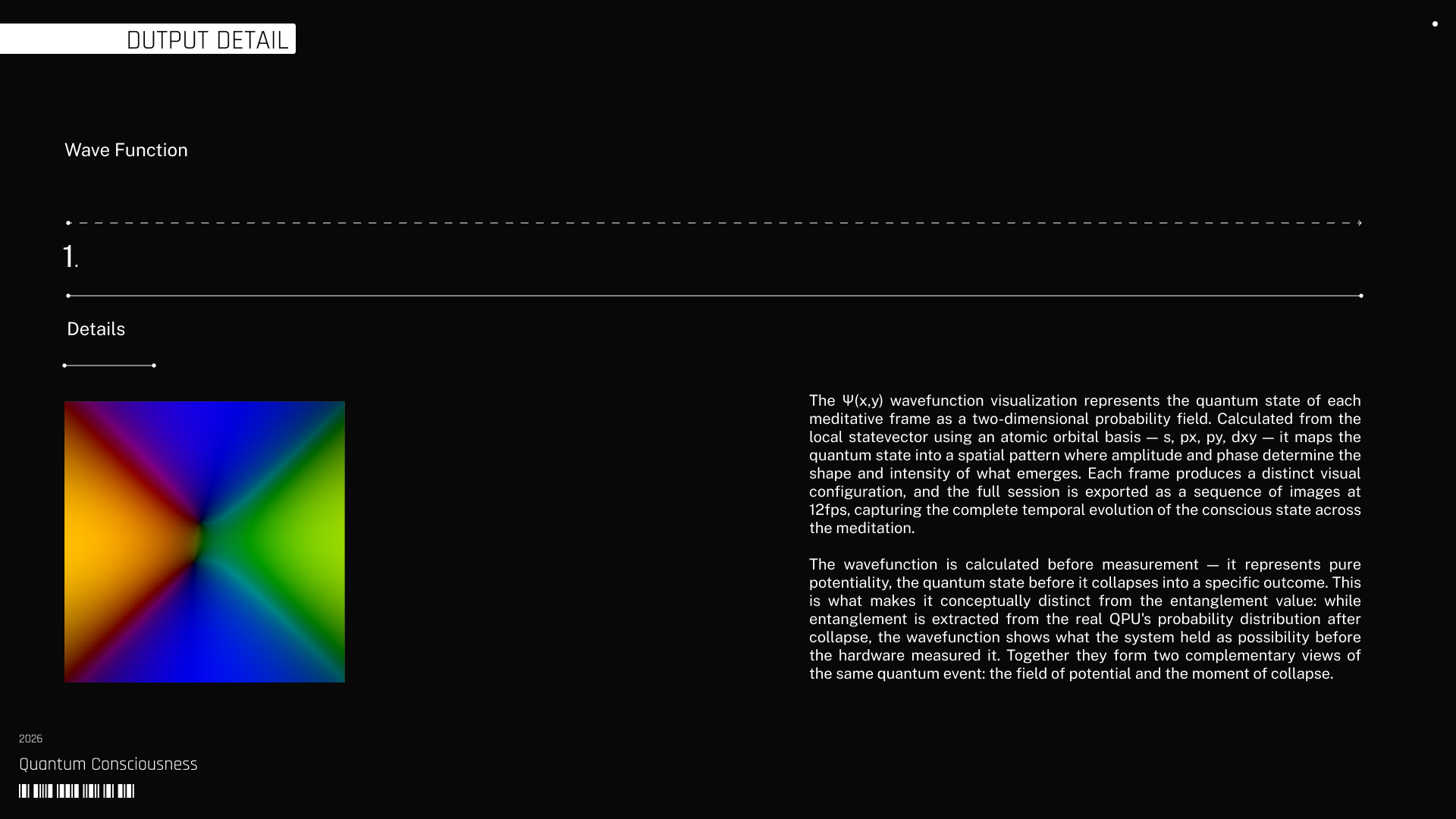
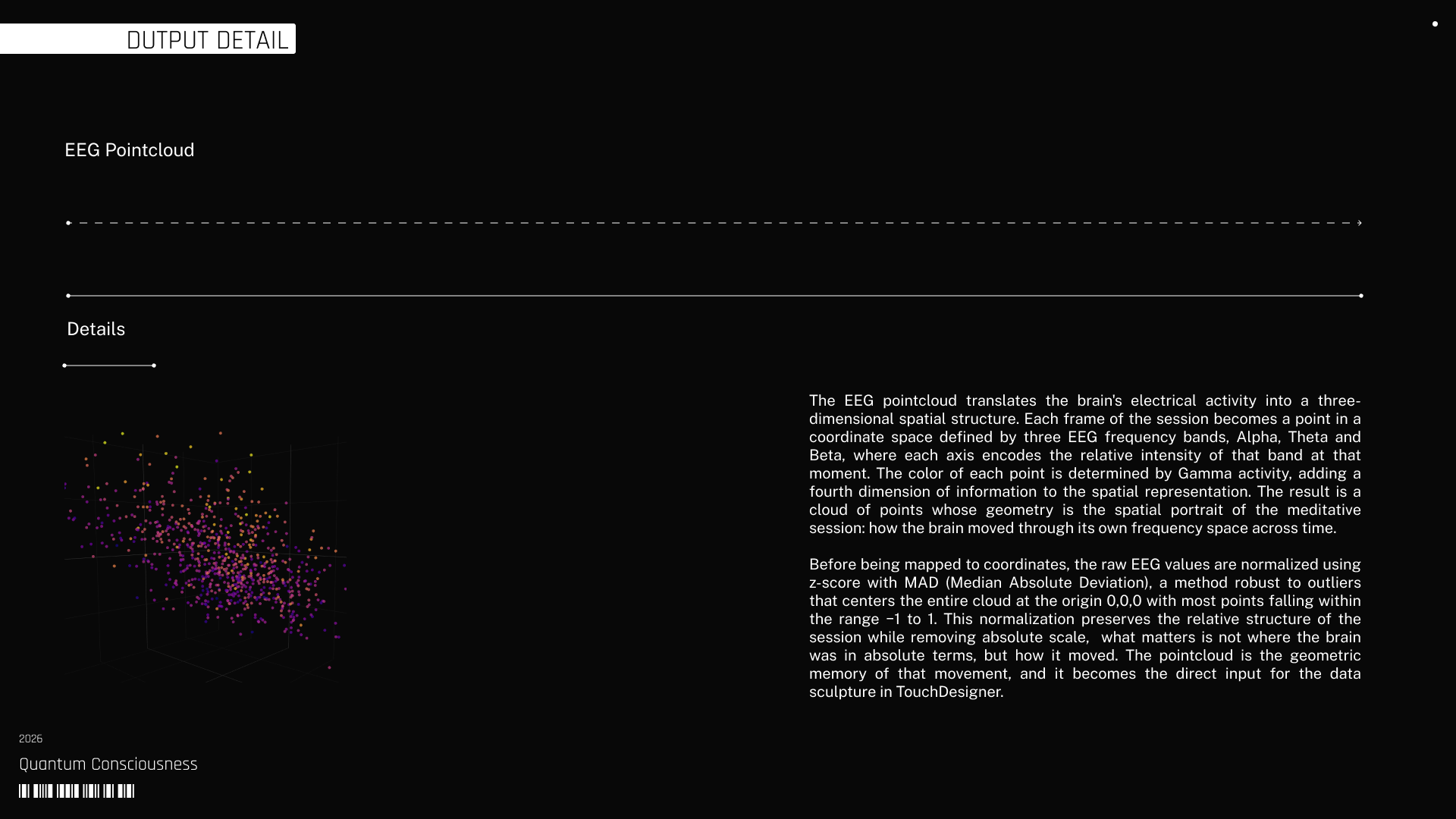
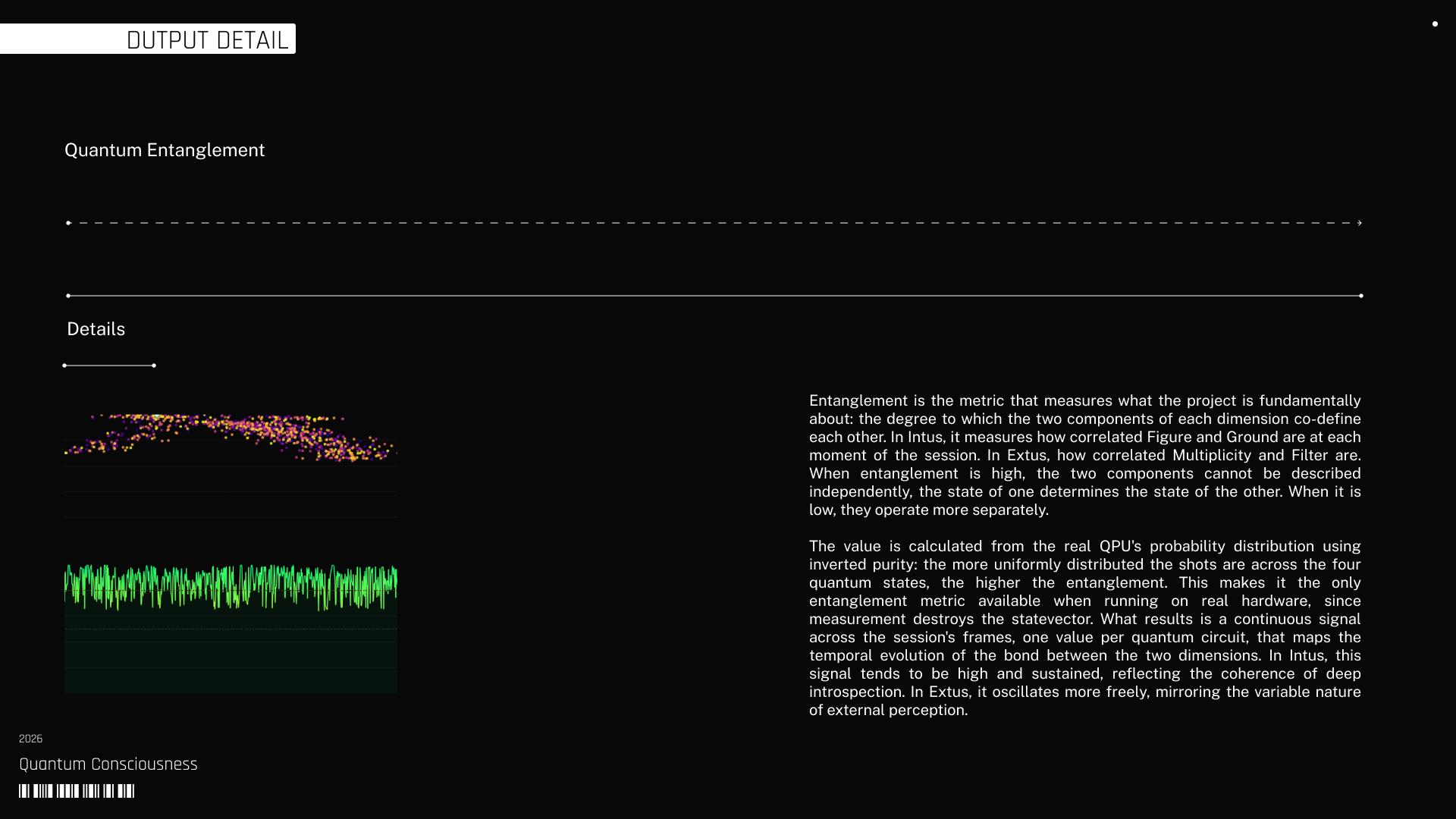
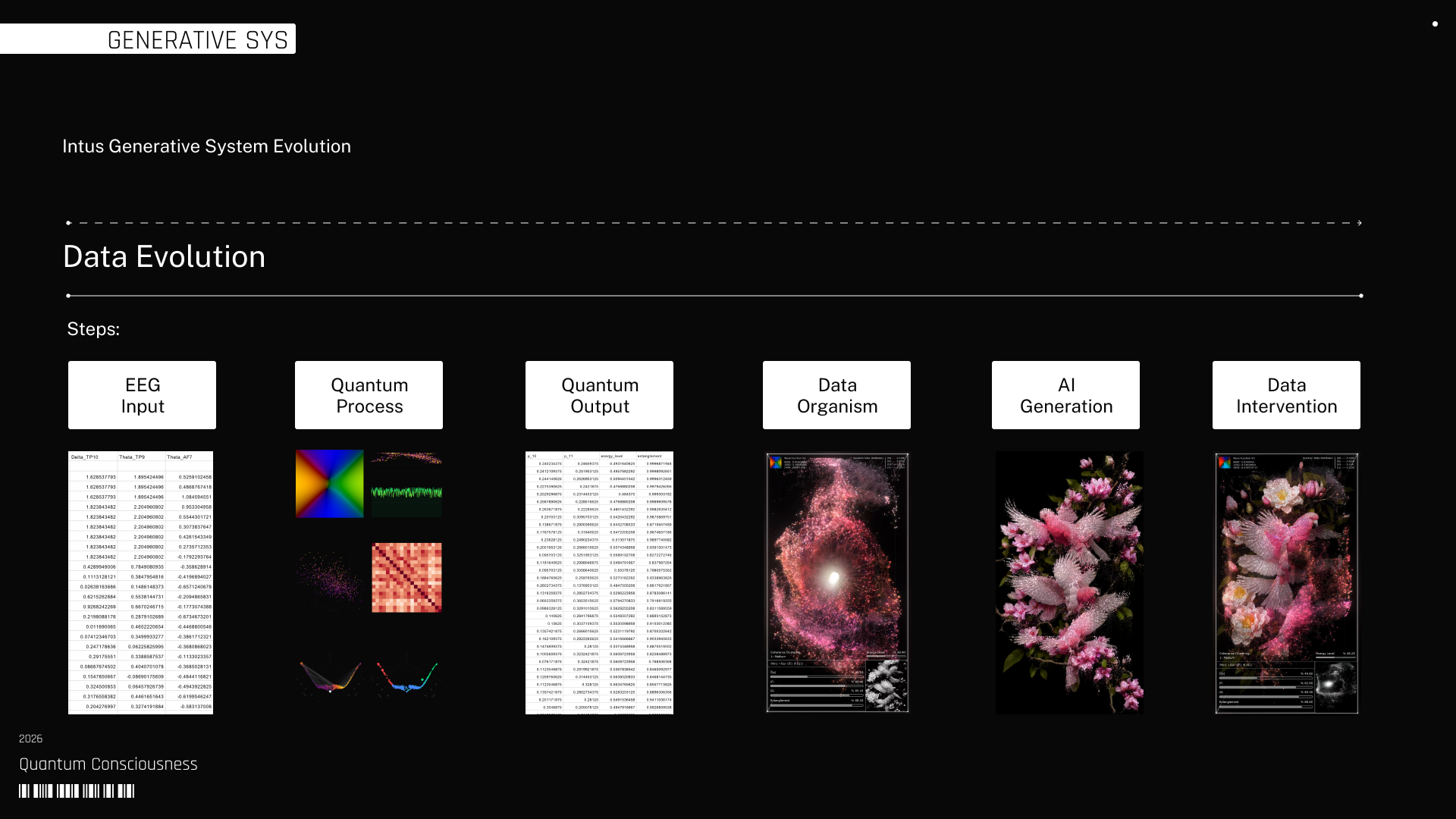
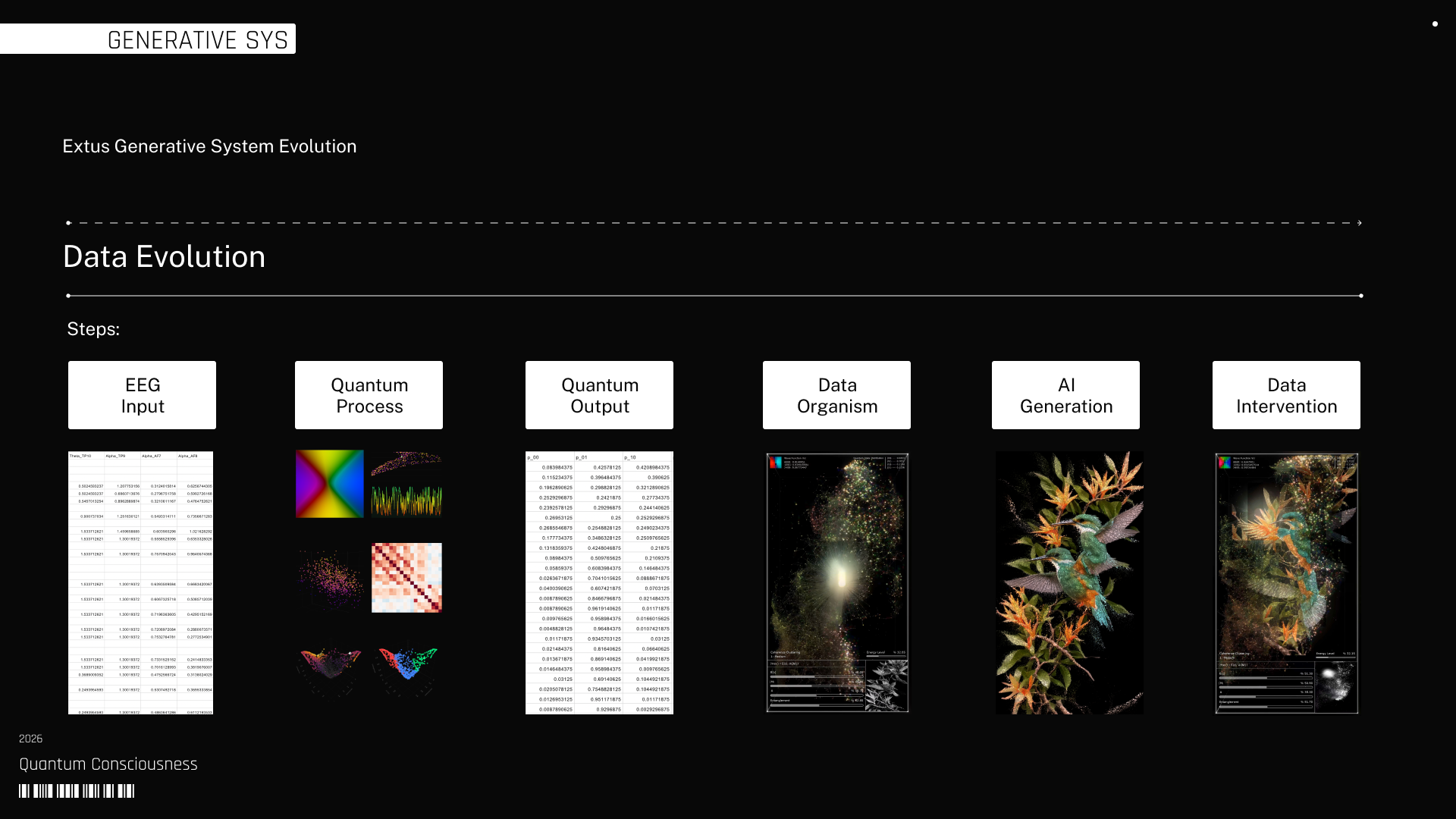
The work operates directly within that relation through a technical system that does not illustrate the process but instantiates it. EEG data captured during meditative states records the real activity of the nervous system as both orientations unfold. A custom AI engine processes this signal through sliding windows, normalization, and clustering, extracting the structural components that define each state. These components parameterize a 2-qubit quantum circuit executed on real Quantum hardware, where the relationship between them is encoded as entanglement. The system produces a distribution of states from which effective entanglement is calculated, embedding within each result the indeterminism and noise inherent to physical computation.
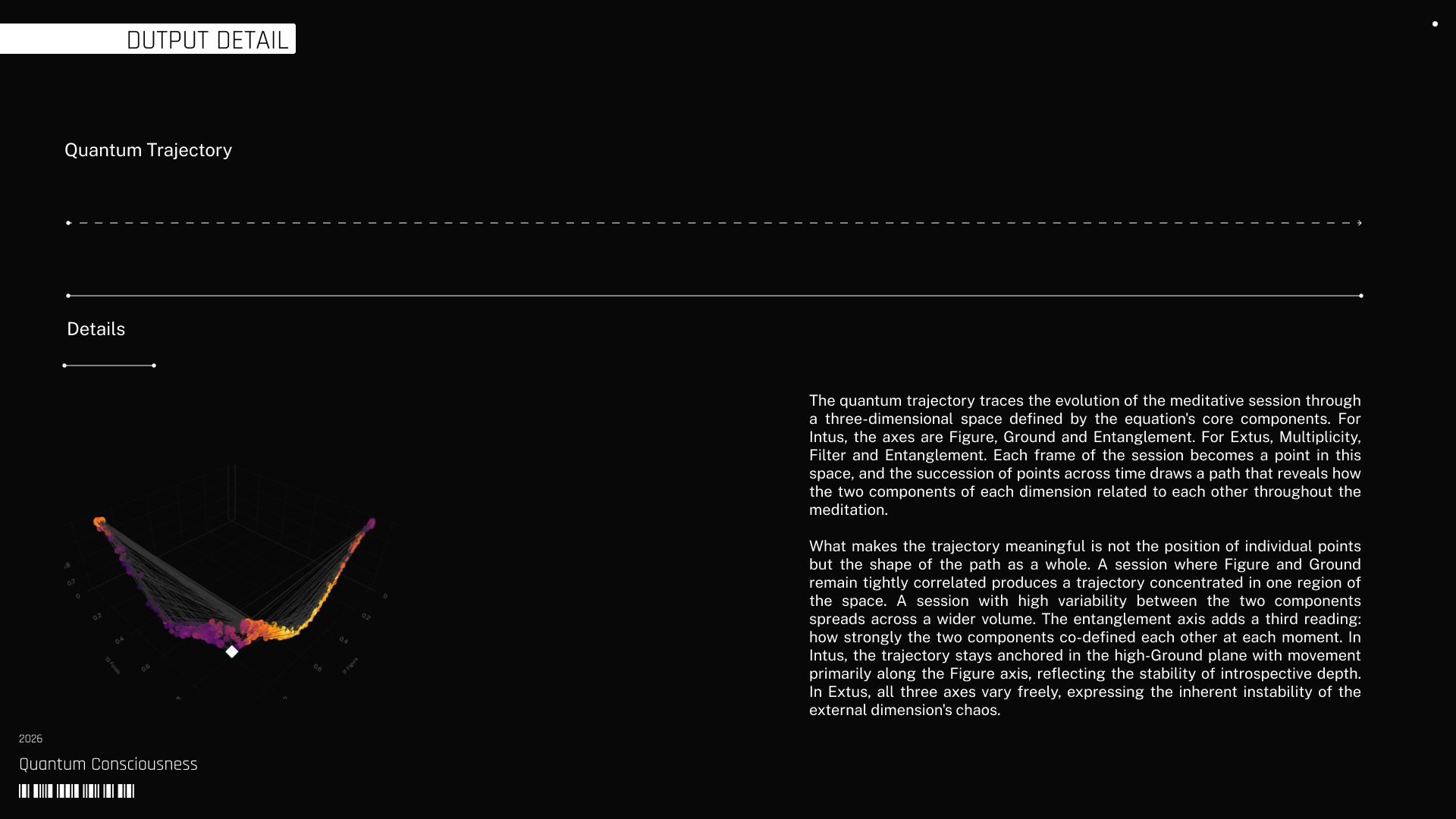
That output feeds a generative organism constructed in visual code software, where the quantum state takes spatial form as a dynamic pointcloud modulated in real time. The evolution of the system is expressed through trajectories, distortions, and correlations that remain tied to the underlying data. This structure becomes the substrate for generative AI models, which translate the organism into the final visual configuration. Each stage preserves the dependency between components, carrying forward the same condition across different layers of execution.
The internal dimension remains open through the constant arrival of what comes from outside; without that flow, it stabilizes into repetition. The external dimension carries the traces of what has already been learned to perceive, never appearing without that prior shaping. Their relationship persists as tension, sustaining the conditions under which conscious experience continues to unfold.
The spectator enters at the moment of perception, activating the same structure under new conditions. What appears externally is received and organized into a singular configuration that exists only in that instant. Each encounter produces a result that cannot be replicated, shaped by the convergence of system, data, and observation.
Intus
Link to the piece
Link to the piece